Now You Can Ride in a Google Self-Driving Car
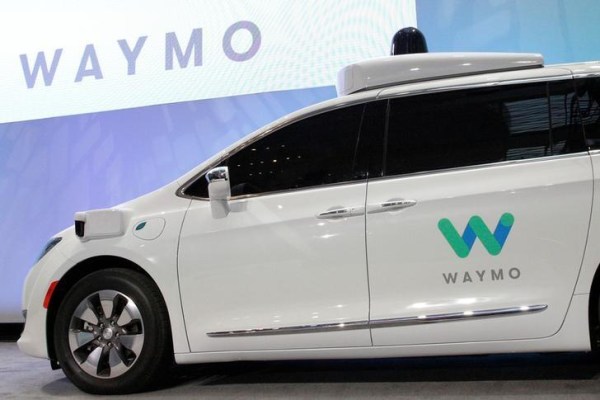
Waymo had quietly begun offering rides to a
"handful of Phoenix, AZ residents…over the last month," the Alphabet
subsidiary's CEO John Krafcik revealed in a statement issued overnight.
"Now residents in the Phoenix area can apply" to join the trial, with
Waymo planning on "accepting hundreds of people with diverse backgrounds
and transportation needs who want to ride and give feedback about
Waymo's self-driving cars."
From Science Fiction to Reality
Then a small project launched by Google, Waymo
was one of the first to begin exploring the idea of making autonomous
vehicles, long the stuff of science fiction, an everyday reality. Since
then, the company says it has clocked more than 2 million miles of
driving on public roads with a variety of different prototypes.
Early versions relied on modified Lexus SUVs.
Two years ago, Google turned to Detroit auto supplier Rousch to produce
about 100 sci-fi-style bubble cars specifically designed to test its
autonomous technology. Some of those will eventually be put on the road
in completely driverless form, with no pedals or steering wheel.
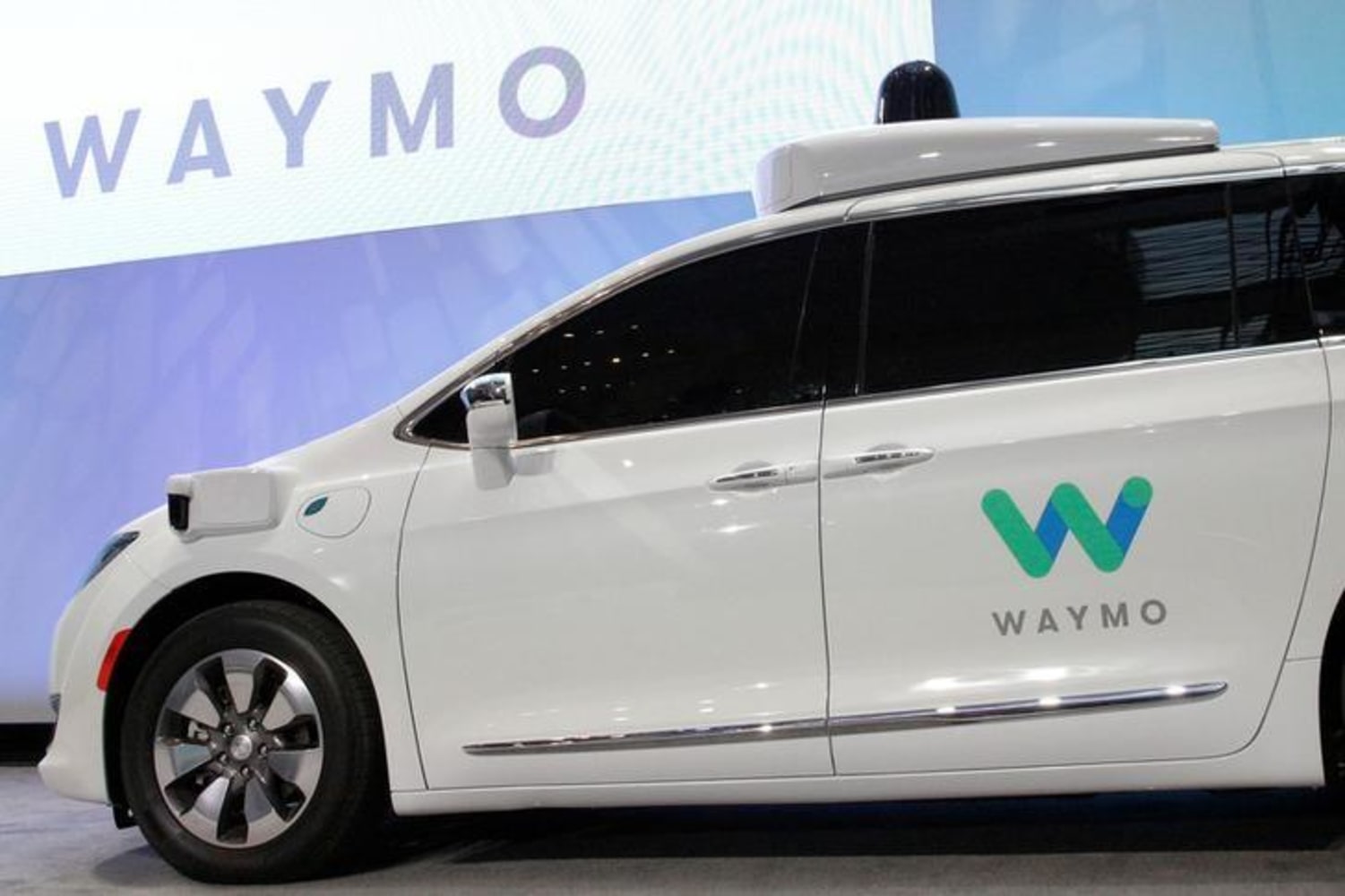
The Arizona pilot, however, relies on a
specially modified version of the new Chrysler Pacifica Hybrid, a
plug-in minivan. Waymo unveiled the first of 100 at the North American
International Auto Show in January. It will now take delivery of 500
more.
While a relatively modest number by ordinary
automotive standards, that's a big development for FCA. The automaker
has been slow to enter the autonomous research field, unlike rivals like
Ford, General Motors, Toyota and Nissan. It opens the possibility of a
much larger, longer-term collaboration between FCA and Waymo that could
leapfrog the smallest of the Detroit makers into a position of
leadership.
First to the Market
The tie-up also helps Waymo cement its
position in the autonomous hierarchy. Long seen as a leader, it was
downgraded in a recent study of self-driving technology by Navigant
Research, which put Ford at the top, followed by traditional automakers
including General Motors, Nissan and Daimler AG. Navigant cautioned that
despite having great technology, Waymo lacked a "pathway to
production."
The expanded ties to FCA - as well as a new
deal with Honda - could offer Waymo a path to go from concept to pilot
to real world applications.
"This collaboration is helping both companies
learn how to bring self-driving cars to market, and realize the safety
and mobility benefits of this technology," said Waymo's Krafcik in the
company release.
While Fiat Chrysler is providing the minivans
for the Arizona pilot, Waymo is handling the technical end. It has been
producing its own sensors to help its cars "see" the world around. That
includes a new generation of laser-based LIDAR. These high-definition,
3D sensors cost about $70,000 apiece until recently, a hefty price tag
considering four are needed. At the January auto show unveiling, Krafcik
said Waymo's LIDAR sensors are down to $7,000 apiece - and some experts
believe they will eventually fall to as little as $50, making
widespread use affordable.
Not Completely Driverless Just Yet
The modified Chrysler Pacifica minivans are
capable of operating without a driver onboard, something that would be
permitted under Arizona regulations, but Waymo will, at least for the
near future, continue to have a trained "operator" at the ready behind
the wheel in the event of a problem.
How consumers will respond to the open public
invitation remains to be seen. Another recent study, this one by J.D.
Power and Associates, found a sizable majority of Americans remain wary
of self-driving vehicles and unwilling to ride in one - the exception
being Millennials.
One reason for such concern, according to
Power Vice President Kristin Kolodge, has been news about crashes
involving autonomous and semi-autonomous vehicles. Waymo itself has
experienced more than a dozen incidents, albeit most of them minor and
only one blamed on one of its vehicles. In recent weeks, two crashes
have occurred in the Phoenix area, one involving a self-driving Uber
prototype, another a Tesla Model X running in semi-autonomous Autopilot
mode. A fatal accident was reported last May involving Autopilot, though
a federal investigation largely put the blame on the driver.
Waymo actually isn't the first to give
everyday consumers a chance to participate in an autonomous pilot.
Ride-sharing giant Uber has been operating a program in Pittsburgh, near
its self-driving research center. It also launched a test in San
Francisco last December, shutting it down a week later as a result of a
run-in with state authorities - and reports that some of its prototype
Volvo XC90 SUVs had violated traffic laws.
Uber recently returned to San Francisco,
though it is not yet picking up paid customers. It is also testing some
of its own vehicles in Arizona, a state that has been aggressively
trying to position itself as a center for autonomous vehicle
development.
The race to bring autonomous vehicle
technology to market has accelerated, not only on the road but in the
courts. A number of lawsuits have been filed in recent months, notably
including one ongoing case pitting Waymo against Uber. The Google
spin-off claims former employees stole intellectual property when they
left to form their own self-driving truck company. That firm, Otto, was
later acquired by Uber.
by:nbcnews.com
Now You Can Drive in a Google Self Driving Car..........
www.redlineautosales.ca/now-you-can-ride-in-a-google-self-driving-car.htm
#redlineautosales





 Since ride-sharing services like Uber and Lyft were launched about
seven years ago, they continue to have a greater influence on our
mobility and culture. Thousands of people have become ride-share
drivers, millions of ride-share trips occur daily and billions of
dollars are spent on these services each year. Yet ride-sharing has only
scratched the surface.
Since ride-sharing services like Uber and Lyft were launched about
seven years ago, they continue to have a greater influence on our
mobility and culture. Thousands of people have become ride-share
drivers, millions of ride-share trips occur daily and billions of
dollars are spent on these services each year. Yet ride-sharing has only
scratched the surface.