Friday, 23 June 2017


Panasonic sees the future of solar on car rooftops


The Japanese electronics giant has started producing a 180-watt array of solar cells that can be fixed to the roof of an automobile. In February, Panasonic announced that its photovoltaic module would be used on the roof of Toyota Motor Corp.'s latest Prius plug-in hybrid.
Cars represent a potentially lucrative new outlet for solar cells in an industry where intense competition from Chinese manufacturers has pushed down prices sharply. That's prompting some manufacturers to adapt solar cells for everything from home roofing tiles and the outer skins of buildings to backpacks and tents.
"Car roofs have the potential to become a new market for solar panels," said Shingo Okamoto, the general manager at Panasonic who was in charge of developing the technology. "We made history in the auto industry and in the solar industry with the sun powering mass-produced cars for the first time in the world."
New market
Cars could hold the promise of a giant new market for solar panels from Panasonic, which also is partnered with Tesla Inc. in making batteries at its Gigafactory outside Las Vegas. There are 264 million cars and light trucks in operation in the U.S., according to the National Automobile Dealers Association.
Others are noticing the potential. Tesla Chairman Elon Musk tweeted in November that his company's Model 3 car may come with a solar roof. He's also beginning to sell a type of roof tile for homes featuring embedded photovoltaics. Nissan Motor Co. offers an add-on solar panel option for its Leaf electric cars, giving extra charge to systems such as the air conditioners and radios, according to Nicholas Maxfield, a spokesman for the company.
Hanergy Holding Group Ltd. unveiled four concept solar cars last year but has yet to begin commercial production. It's seeking to develop car roofs using thin-film solar chips with Fuyao Glass Industry Group.
As of the end of April, Toyota had sold 1,350 units in Japan of the new Prius plug-in equipped with solar panels, nearly 9 percent of the total, according to the car maker.
Range estimates
The latest Prius is the first mass-produced model to be outfitted with solar panels that provide juice for the car's main battery, according to Toyota. Because of seasonal variations in sunlight, the amount of charge will fluctuate, meaning the average distance traveled on a single charge will range from an average of 2.9 kilometers (1.8 miles) to 6.1 kilometers depending on the time of year.
"That means you get about 10 percent of annual mileage from solar just by letting your car sit," Okamoto said in an interview in Tokyo.
While that's modest, developers say the amount of charge will improve over time and that the range could be extended by adjusting a car body's design and the amount of surface upon which the panels can be affixed.
"We are aware that the panels are supplying only a small amount of electricity," said Shoichi Kaneko, chief engineer for Prius. "But this system is still a breakthrough as we are making use of the energy we would be wasting otherwise. By filling all available space with cells, it is possible to extend the range easily to 10 kilometers."
In its current iteration, the solar rooftop represents a step forward for Toyota as it aims to reduce carbon dioxide emissions from new cars by 90 percent by 2050 from 2010 levels.
Main battery
This is Toyota's second attempt to outfit a Prius with a solar roof. A Prius released back in 2009 had the option of a solar panel capable of producing 56 watts of power, but it was only used to charge the ventilation systems.
To come up with the panels needed for the new Prius, Panasonic engineers first began compiling a set of conditions and constraints they figured solar panels would face when affixed to the roof of a car instead of a house.
The list included constant vibration, the unpredictable appearance of shadows, and the limited amount of space for installation. Engineers also considered how to make panels fit the contours of a car's roof instead of the flat surfaces found on residential rooftops.
To handle the variable sunlight expected from shade, Panasonic also adjusted the way bypass diodes are configured in the solar panels to ensure a smooth flow of electric current, according to Panasonic's Okamoto.
"You'll see panels become more common as an option, particularly on high-end electric sedans and SUVs," said Colin McKerracher, an analyst at Bloomberg New Energy Finance. "But the range benefits are always going to be limited. This is mostly about feeling smug."

by: autonews.com

Panasonic Sees the Future of Solar on Car Rooftops................. http://www.redlineautosales.ca/panasonic-sees-the-future-of-solar-on-car-rooftops.htm #redlineautosales

Friday, 16 June 2017


Tesla Could Soon Gain a 'Near-Monopolistic' Hold on the Electric Car Market


Tesla is already a leader in the electric vehicle market, but the extent of its advantages in manufacturing may be underestimated.
According to a team of Berenberg analysts led by Alexander Haissl, Tesla's competitors have opted for a "low-risk, low-investment" strategy when it comes to electric vehicle manufacturing. That will leave Tesla in the driver's seat with its all-in approach.
"With no clear pathway to high-volume EV [electric vehicle] production for these OEMs [original equipment manufacturers] before the mid-2020s," write the analysts, "Tesla will be given a near-monopolistic opportunity to gain market share and outcompete the incumbent automotive industry."
Tesla will invest roughly $32.7 billion into electric vehicle projects over the next five years, which is 40% more than Daimler and Volkswagen combined, according to Berenberg estimates.
The investment gap comes from traditional auto manufacturers focused on lowering costs by incorporating new electric vehicle technology into existing manufacturing plants, as opposed to new plants solely dedicated to the mass production of electric vehicles.
Additionally, Tesla's partnership with Panasonic, aimed at improving battery technology, has put Tesla ahead of the pack in that category as well.
"Tesla/Panasonic continue to exhibit a clear advantage on cell and pack technology compared to all peers, on chemistry, cooling and cost," write Berenberg analysts. "Tesla's small and actively tube-cooled cells, which are not currently replicated and are unlikely to be so by competitors, drives significantly better residual values and cost-of-ownership advantages."

by: inc.com

Tesla Could Soon Gain a Near-Monopolistic Hold on the Electric Car Market............ www.redlineautosales.ca/tesla-could-soon-gain-a--near-monopolistic--hold-on-the-electric-car-market.htm

Friday, 9 June 2017

Honda's new strategy focuses on self-driving cars

HAGA, Japan -- Honda Motor Co. outlined its plans to develop autonomous cars with level 4 capability that can drive on city streets by 2025, building on its strategy to take on automotive rivals of the future.
Unveiling its mid-term Vision 2030 strategy plan on Thursday, Honda said it would boost coordination between r&d, procurement and manufacturing to tame development costs as it acknowledged it must look beyond conventional vehicles to survive in an industry that is moving rapidly into electric and self-driving cars.
Honda has already spelled out plans to market a vehicle which can drive itself on highways by 2020, and the new target for city-capable self-driving cars puts its progress slightly behind rivals like BMW Group.
"We're going to place utmost priority on electrification and advanced safety technologies going forward," Honda CEO Takahiro Hachigo said.
Developing new driving technologies, robotics and artificial intelligence-driven services and new energy solutions also would be key priorities for Honda in the years ahead, the company said.
Leveling up
Honda established a division late last year to develop electric vehicles as part of its long-held goal for lower-emission gasoline hybrids, plug-in hybrids, EVs and hydrogen fuel cell vehicles to account for two-thirds of its lineup by 2030, from about 5 percent now.
By 2025, Honda plans to come up with cars with level 4 standard automated driving functions, meaning they can drive themselves on highways and city roads under most situations.
Achieving such capabilities will require artificial intelligence to detect traffic movements, along with a battery of cameras and sensors to help avoid accidents.
BMW has said it would launch a fully autonomous car by 2021, while Ford Motor has said it will introduce a vehicle with similar capabilities for ride-sharing purposes in the same year. Nissan Motor is planning to launch a car which can drive automatically on city streets by 2020.
Honda has been ramping up r&d spending, earmarking a record 750 billion yen ($6.84 billion) for the year to March.

by: autonews.com


Hondas New Strategy Focuses on Self Driving Cars.................................. www.redlineautosales.ca/honda-s-new-strategy-focuses-on-self-driving-cars.htm  #redlineautosales

Friday, 2 June 2017


Genesis Motors opens 1st retail location in Canada


In an effort to elevate its customer experience, Genesis Motors Canada has launched Genesis Downtown, the brand's first boutique retail storefront in Canada on Queen Street East in downtown Toronto.
"Genesis Downtown is another touchpoint for our customers. Since launch, our customers have expressed a desire to experience the brand in a more traditional automotive setting," Genesis Downtown distributor principal Shahin Alizadeh said in a news release. "As Genesis was built on the concept of human-centered luxury, this boutique provides another resource through which the brand can serve its customers."
The new store is a boutique-style facility with sleek, modern and rich finishes, where customers in the Toronto area can also learn more about vehicle models, pricing and ownership benefits, Genesis Motors said.
"Athletic elegance in design is at the core of Genesis vehicle design for its vehicles, and that inspiration is reflected in Genesis Downtown," the company said. "Key to this approach is modern, comprehensive online and boutique platforms to empower a luxury automotive customer to enjoy a retail experience that seamlessly integrates into their life."
Between this year and 2021, the brand will expand with three additional boutiques and about 30 stand-alone facilities, Genesis Motors said.
"Genesis goes beyond offering exceptional vehicles by providing a human-centred purchase and ownership experience," Genesis brand director Michael Ricciuto added. "Genesis delivers personalized service every step of the way with the Genesis-at-Home concierge service and now, with the first retail store in Genesis Downtown, luxury boutiques."

by: autoremarketing.com
 
 
Genesis Motors Opens 1st Retail Location in Canada............................. www.redlineautosales.ca/genesis-motors-opens-1st-retail-location-in-canada.htm #redlineautosales

Friday, 26 May 2017

Tech Giants Most Trusted to Build Self-Driving Cars

CARS.COM - A new study finds American consumers have slightly more faith in tech giants such as Google and Apple than in traditional automakers to build autonomous cars. Trust in ride-hailing companies, such as Uber and Lyft, to develop such cars was far behind.
The study, by connected car services company Inrix, also found that they put significantly more trust in tech companies to protect their collected private data, though 29 percent don't trust any company to do that.
The international study of more than 5,000 people in the U.S., U.K., Germany, France and Italy found three main concerns about connected cars (those with internet connections) and autonomous cars (connected cars that can control themselves): trust in making the cars, protecting data privacy and safety.
"A new battleground is emerging between automakers, tech companies and ride-sharing companies in the race to develop connected and autonomous vehicles," said Bob Pishue, Inrix senior economist, in a statement. "With hundreds of millions of connected cars expected to be on the roads within the next 15 years, the market share will be owned by companies that can educate drivers and gain consumer trust."
Regardless of how they feel about them, 62 percent of U.S. consumers expect to see many autonomous cars within a decade.
Details of Americans' concerns revealed in the survey:
  • 27 percent trust tech giants to build autonomous cars, versus 23 percent for conventional automakers and just 4 percent for ride-hailing companies.
  • 1.4 times more Americans trust tech giants to protect the privacy of their connected car data than automakers, with Generation X and millennials most trusting of tech companies. Nearly half of baby boomers trust no one.
  • It's the expectation of 71 percent of respondents that autonomous vehicles will be as safe or safer than cars today, though among baby boomers, 73 percent do not believe they will be safer.
  • Blind sport warning is the most desired feature, followed by stolen car tracking, night vision, traffic alerts and rerouting, and front and rear collision warning.

by: cars.com 


Tech Giants Most Trusted to Build Self Driving Cars................................... www.redlineautosales.ca/tech-giants-most-trusted-to-build-self-driving-cars.htm

Friday, 19 May 2017


Millennials have less connection to first car than boomers


A new survey from CarGurus reveals that the first car buying experience of millennials starkly differs from that of previous generations.
Compared to millennials, baby boomers were not only found to have been more involved when selecting their first car, but were also far more likely to have contributed to the purchase cost, the online automotive shopping platform said. While only 37 percent of millennials surveyed said they contributed to the cost of their first car, 65 percent of baby boomers told CarGurus they paid for some or all of their first car, according to the survey. And 53 percent of Gen Xers contributed to the cost of their first car.
"Our data shows a clear generational shift in the dynamics of first car purchase," said Sarah Welch, senior vice president of consumer marketing, said in a news release. "Given the rise of autonomous vehicles, ride sharing and sweeping urbanization, it will be interesting to see if future generations show the same trend in parents controlling the first car purchase or if we'll see a drop-off in dependents needing a car at a younger age."
Twenty-three percent of millennials' first cars were hand-me-downs, while only 10 percent of baby boomers were, according to the survey.
The survey also found that millennials were more likely to receive their first car from a family member, and were just as likely to not have a choice. Thirty-four percent of the millennials surveyed said they were given their first car for either school, a job or extracurricular activity.
Thirty-three percent of millennials did not have a say in their first car, as opposed to 24 percent of baby boomers.
Although the survey shows clear differences in first car buying experiences between generations, it presents a few similarities, as well.
The survey found that 83 percent of all first cars were either bought or given used and 55 percent of drivers got their first car between the ages of 16 and 18.
Additionally, the survey also asked participants to name their favorite car brands. Chevrolet is the only brand to top each generation's list of favorite brands. The overall most popular brands amongst all the drivers surveyed are Ford, Chevrolet, Toyota, Honda and Dodge, respectively.
The following are lists of the top five brands for each generation.
Baby boomers: Most popular first-car brands
  1. Ford
  2. Chevrolet
  3. Volkswagen
  4. Plymouth
  5. Toyota
Generation X: Most popular first-car brands
  1. Ford
  2. Chevrolet
  3. Toyota
  4. Dodge
  5. Pontiac
Millennials: Most popular-first car brands
  1. Chevrolet
  2. Honda
  3. Toyota
  4. Ford
  5. Nissan
CarGurus said it conducted the online survey of more than 1,800 randomly selected participants last month. Survey participants included drivers who have owned a car, ranging from 18 years of age to 70.

by: autoremarketing.com

Millennials Have Less Connection to First Car than Boomers......... www.redlineautosales.ca/millennials-have-less-connection-to-first-car-than-boomers.htm  #redlineautosales

Saturday, 13 May 2017

Most motorists will turn to driverless cars

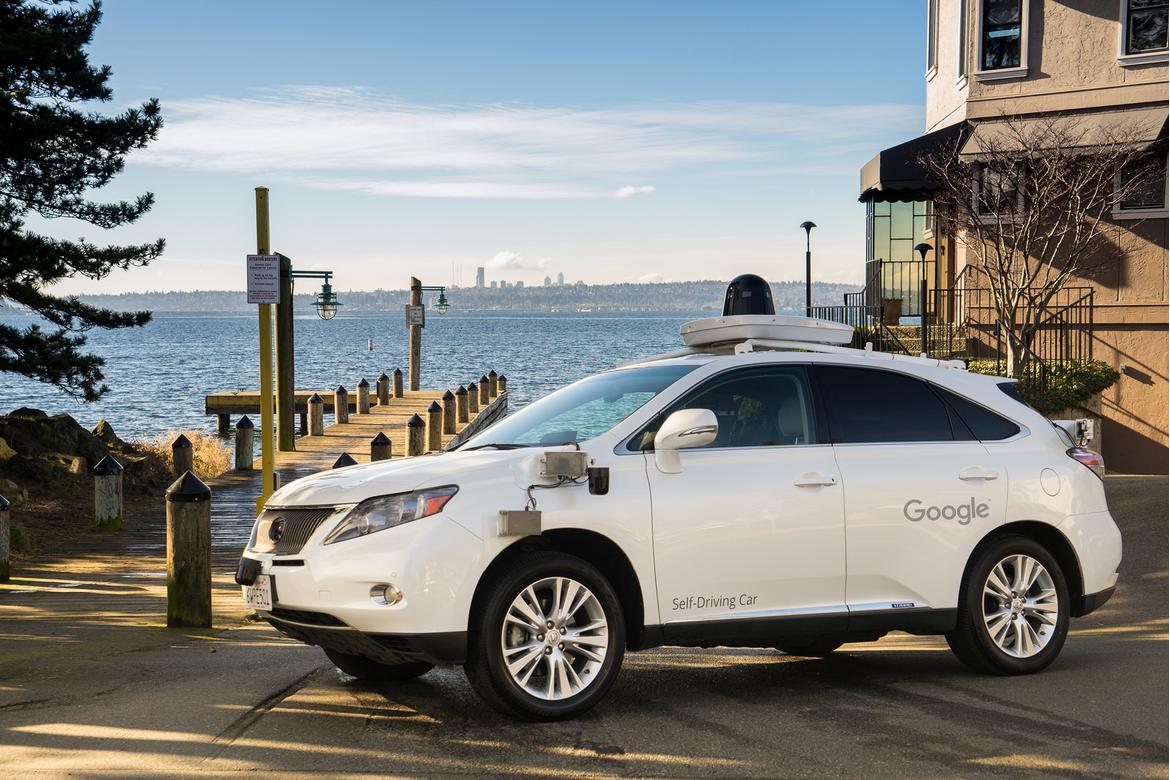
According to a recent study made by an independent research group, 95% of U.S. car miles will be traveled in cars that are self-driving, electric, and shared with others. RethinkX produced the report, and its makers believe that the change will happen within the next 13 years.

Moreover, the researchers believe that about 60% of U.S. vehicle stock will be composed of autonomous electric vehicles that will be owned by companies that provide Transport as a Service. Evidently, the predictions presented above would only happen once self-driving vehicles receive governmental approval.

From the moment when authorities will let companies sell driverless cars and deploy them for the general public across the USA, another decade will pass until they outnumber regular cars.

The same research estimates that it will be four to ten times cheaper per mile to use Transport as a Service (TaaS) offers than to operate an existing paid-off vehicle by 2021. The costs will get driven down by improving electric vehicle technology, lower insurance, cheaper finance, and not using fossil fuels.

American households will be able to save an average of $5,600 per year if they give up a gas-powered car for TaaS for all their journeys. Cost savings like the one presented have the potential of making numerous families ditch their automobiles for driverless electric vehicles that are used only when required.

We cannot help wondering what is supposed to happen, in the given situation, to all of the cars that the people described above used to own.

Evidently, people will still own cars in 2030, but not that many will be interested in doing that. Fortunately, the study does not believe car enthusiasts will disappear, as they would probably have to kill us all, but those who use vehicles as simple means of transportation are expected to ditch personal vehicle ownership and use TaaS solutions.

The market disruption predicted by the researchers will lead to jobs being lost in many fields, but other opportunities will be open in their place. We think that they are a bit on the optimistic side, but do not exclude the possibility of these predictions becoming true in a bit more than a decade.

by: autoevolution.com
 
Most Motorists Will Turn to Driverless Cars................... www.redlineautosales.ca/most-motorist-will-turn-to-driverless-cars.htm