Saturday, 28 May 2016

Auto industry, in general, struggling to deal with high-tech problems.


The good news is that automakers are loading up today's vehicles with more and more high-tech safety, performance and infotainment technology. The bad news is that these systems are generating more and more complaints from consumers frustrated by balky and poorly written software. Smart, Tesla, Jaguar and Land Rover are three of the brands that are generating some of the highest number of complaints, according to a new study by J.D. Power and Associates. According to the research firm, the number of complaints about vehicle software filed with the National Highway Traffic Safety Administration have been growing rapidly in recent years, jumping 22% in 2015 alone.
"Consumer complaints are the canaries in the coal mine for automobile manufacturers when it comes to anticipating future recalls and longer-term customer satisfaction," said Renee Stephens, vice president of U.S. automotive at J.D. Power, in a statement. "Software-related problems have become much more prevalent and, if not addressed, could begin to erode consumer trust in new automotive technology."
Between 2011 and 2016, Daimler's Smart brand had the highest number of software complaints, according to Power, followed by Isuzu - a brand no longer available in the U.S. - Tesla, Volvo and British siblings Jaguar and Land Rover.
At the other end of the spectrum, the brands with the least complaints (on a per 1,000 vehicle basis) were Chevrolet, GMC, Ram, Toyota, Mazda and Subaru.
The results of the new J.D. Power study immediately generated some controversy and criticism. A spokesman for Volvo faulted the report's methodology, raising numerous questions, including the process by which Power determined which automakers had experienced the most software complaints. Among other things, said Volvo's Jim Nichols, the Swedish maker's dealers routinely update onboard software whenever a vehicle is serviced. But that does not mean there is a glitch or a recall.
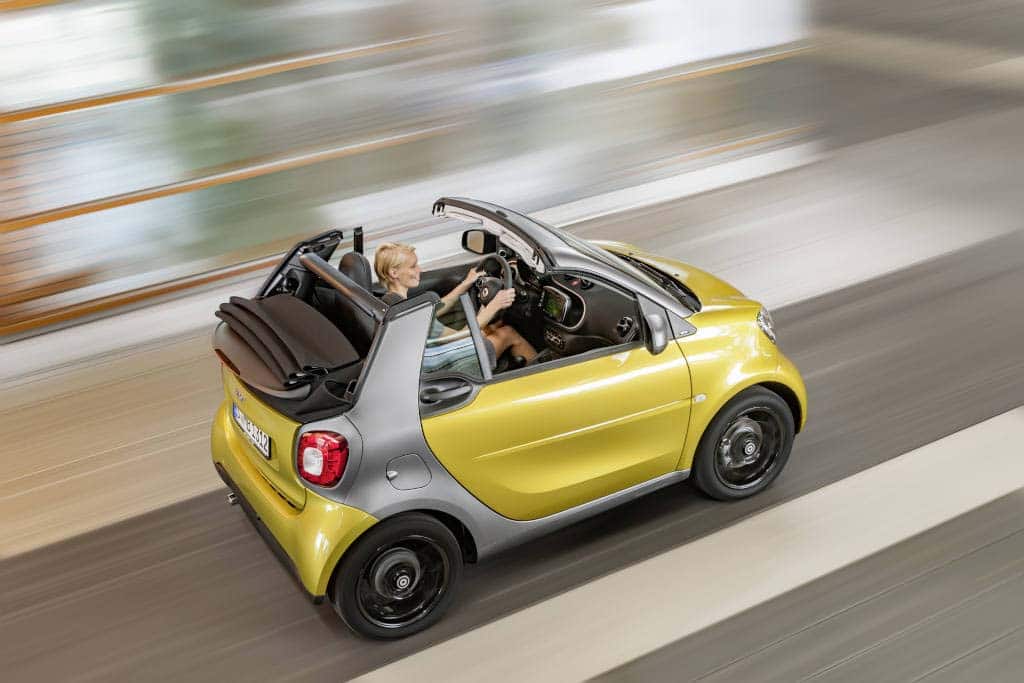


The Smart brand had the highest number of complaints in a recent survey.
That said, the study does appear to touch on a growing problem affecting the auto industry at large.
Today's cars routinely pack in more electronic hardware than a typical home or office. It's not unusual to have 100 million or more lines of software code operating all those systems, substantially more than the latest Air Force fighter jets. But separate research by RedBend, a company that handles over-the-air software updates, finds that the typical vehicle contains anywhere from five to 20 "flaws" for every 1,000 lines of code.
And that doesn't even factor in poor design issues that may make it difficult to understand or use a navigation or voice control system.
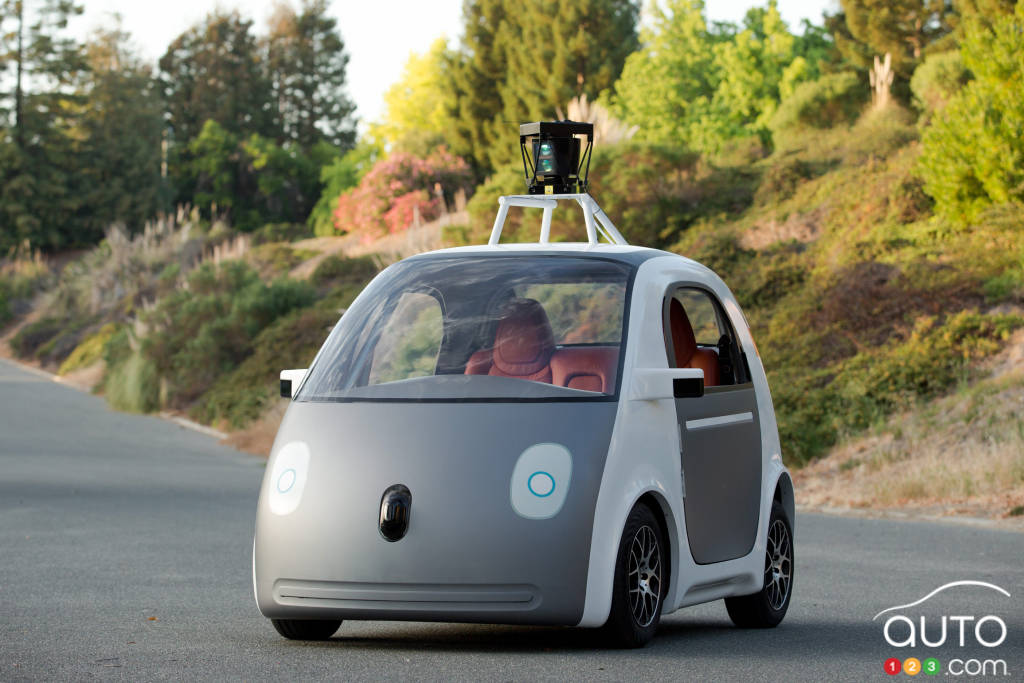
If anything, Power warns that software problems could continue to rise as vehicle technology becomes even more complex. That's all but certain to happen as automakers move closer and closer to the introduction of fully self-driving vehicles.
Some of the problems pose potentially serious safety risks. As a result, there have been 189 recalls linked to software problems over the past five years, 141 of which could actually cause a crash because of malfunctioning vehicle or powertrain controls. In several cases, such glitches could lead to a car stalling out in traffic. Software-related recalls rose 45% in 2015 alone. In all, according to RedBend, 6.4% of last year's recalls were "software related," a problem that cost makers $440 million to fix.
Other malfunctions simply annoy users. Ford Motor Co. sent frustrated owners of products a memory stick to update a version of its Sync infotainment system several years ago when it learned the technology could freeze or reboot on its own. Those uncomfortable with updating the software on their own had to go to a dealer's service department.
But automakers are beginning to lift a page from the consumer electronics world, smartphones in particular, using over-the-air, or OTA, updates that don't require a vehicle owner's intervention.
Tesla has been the most active proponent of the concept, relying on OTA to not only update faulty software but add new features to vehicles like the Models S and X. That allowed thousands of owners to begin using the new AutoPilot, a semi-autonomous driving technology without visiting a Tesla dealership. Significantly, Tesla used OTA updates to revise the AutoPilot system after receiving complaints about how some owners were misusing it.
Not everyone is comfortable with OTA, however. General Motors' global product chief Mark Reuss prefers to limit over-the-air updates to non-critical vehicle systems, such as infotainment, to limit the possibility hackers could use the radio waves to gain control of a vehicle.
But, one way or the other, automakers will have to find ways to reduce software flaws and, if they discover glitches, fix them as quickly and easily as possible to reduce customer frustration.

by: thedetroitbureau.com


Auto Industry in Genreal, Struggling to Deal with High Tech Problems........... www.redlineautosales.ca/auto-industry--in-general--struggling-to-deal-with-high-tech-problems-.htm

Thursday, 19 May 2016


Top vehicle picks for college grads

Top-car-college-600

Autotrader in the U.S. has come out with its recommendations of reliable and budget-friendly vehicles for recent school graduates.
The editors at Autotrader came up with nine new and CPO vehicles that they said would suit a young buyer's lifestyle, factoring in cost to buy and own, practicality, styling and equipment available. Vehicles have a starting price under $25,000 with at least 12.7 km/litre, said Autotrader.
"All of the vehicles we picked for this list are fun, reliable and thoughtfully designed - perfect choices to fuel the next phase of your journey," said Brian Moody, executive editor at Autotrader, in a written release.
Of the vehicles included in the list, three are CPO.
"CPO cars also merit close consideration, as they offer many of the benefits of a new car, like low mileage and bumper-to-bumper limited warranties, without the new-car price tag," said Moody.
Here's the list of recommended vehicles:
  • FIAT 500X
  • Honda Civic
  • Kia Soul
  • Mazda3
  • Scion iA
  • Subaru Crosstrek
  • CPO Chevrolet Equinox
  • CPO Lexus CT
  • CPO Hyundai Sonata
The U.S. site also includes tips for young buyers, including information on CPO vehicles, credit scores and test drives.

by:canadianautodealer.ca

Top Vehicle Picks for College Grads................................. www.redlineautosales.ca/top-vehicle-picks-for-college-grads.htm

Saturday, 14 May 2016


Driverless cars wouldn’t need speed limits


Ever think about barreling down Interstate 75 at 150 mph and getting to and from work in half the time?
One Wall Street automotive analyst thinks that scenario could play out in a future with fully autonomous cars.
Bank of America Merrill Lynch analyst John Murphy said Wednesday at an Automotive Press Association luncheon in Detroit that completely driverless vehicles wouldn't need speed limits. That would mean quicker commutes to and from work, and more personal time for errands or other activities.
"The industry ... remembers its key function is to get people from A to B quickly. ... If you can get me from A to B at twice the speed or half the time, I'm going to pay you a lot of money for that," Murphy said. "The only reason we have speed limits is for safety reasons. So if all of a sudden you have a fleet of vehicles that can't crash into each other or crash into other objects, why can't you drive 150 mph? There's no rational reason."
Murphy admitted it's a pie-in-the-sky scenario that would involve convincing regulators to change speed limit laws, not to mention actually getting fully autonomous vehicles on the road in bulk, which could take decades. But automakers are already introducing semi-autonomous safety features like lane-keeping assist and automatic emergency braking that are making vehicles safer and could lead to smoother commutes.
"You could potentially really change the industry," Murphy said.
Increasing the speed of travel would give back hours a week that people could use to run errands, spend time with their family or get more work done, Murphy said.
"That's real utility and that's a stimulus to the economy that is major," he said.

by: detroitnews.com
Driverless Cars Wouldn't Need Speed LImits......................www.redlineautosales.ca/driverless-cars-wouldn-t-need-speed-limits.htm

Friday, 6 May 2016

Automotive Virtual Reality Beckons Buyers

GERMANY-HANOVER-FAIR
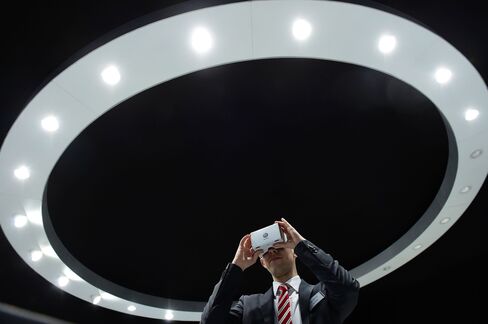
As automakers aim to keep sales ahead of 2015's record-setting pace, they're pulling out all the stops to draw in buyers. Virtual reality may be next in their bag of tricks.
Volkswagen AG's Audi plans to roll out Oculus Rift headsets in a number of dealerships by the end of this year. Johan de Nysschen, president of General Motors Co.'s Cadillac, in February encouraged some of the company's lowest-volume outlets to go virtual. With dealers from Brazil to Berlin already experimenting with virtual reality, automakers see twin benefits of the technology: enhance the customer experience while also shaving off some of the $2.75 billion U.S. dealers spend annually on interest to keep new vehicles on their lots.
"You're wearing the glasses and you really think you're in the car," said Marcus Kuehne, Audi's virtual-reality project lead. The brand already allows customers to pre-equip cars in a handful of highly digitized urban dealerships and sees virtual reality as the next step in letting shoppers see what they want to buy. "You get a good feeling for the size -- do the rims fit to the body of the car, do the colors inside the car fit well together?" he said. "You can judge this much better through this technology than on a screen."
Letting customers manipulate models, color schemes and features in a virtual environment is automakers' latest tool to distinguish themselves in a slower-growing yet very profitable market. April sales announced on Tuesday will probably show gains for most of the biggest U.S. and Japanese automakers, as the annualized selling rate, adjusted for seasonal trends, rises to 17.5 million, according to a Bloomberg survey. The pace and the month's total are projected to set April records.

'Robust' Industry

"Top-line performance of the industry remains robust -- retail demand is strong, transaction prices are at record levels and consumers will spend more on new vehicles than in any other April on record," John Humphrey, senior vice president of the global automotive practice at J.D. Power, said in a statement. "The slowing rate of growth, shift in consumer demand away from cars and toward SUVs, and elevated fleet volumes pose significant challenges to manufacturers as they compete in the marketplace."
General Motors expects industrywide sales to rise 5 percent and a seasonally adjusted annualized pace of 17.5 million vehicles or higher, said Kurt McNeil, vice president of U.S. sales. While the Ford and others have increased sales to fleet customers so far this year, GM has reduced them. As a result, the Detroit-based automaker delivered record North American profits in the first quarter, even as U.S. sales slipped by a few hundred. For April, analysts project a 1.7 percent decline for GM.
"The economic fundamentals are there," McNeil said. "Interest rates are still low and gasoline prices may be the lowest this summer since 2005."
Nissan Motor Co.'s sales may rise 11 percent, the biggest increase projected by the analyst estimates, followed closely by Honda Motor Co., seen gaining 10 percent. Combined sales of Volkswagen's VW and Audi brands may fall 1.5 percent as Europe's largest automaker tries to overcome consumer distrust since its diesel-emissions cheating scandal that may cost about $18.2 bilion.

Enticing Visitors

Automakers already have some experience using virtual reality to promote their vehicles. In 2014, Fiat Chrysler Automobiles NV touted the 2015 Chrysler 200 sedan by giving viewers a virtual reality tour of its factory. Volvo Car Group, owned by Zhejiang Geely Holding Group Co., used the technology to introduce its XC90 SUV to consumers before it became available in U.S. dealerships less than a year ago. And at this spring's New York auto show, Toyota Motor Corp. enticed visitors by letting them use headsets that demonstrated its cars' safety features, including pedestrian detection.
Virtual reality has blossomed from a far-out concept to an almost-practical form of delivering entertainment and information thanks to improvements in image quality, computer bandwidth, and investment by companies like Facebook Inc. Oculus VR Inc., which was bought by Facebook for $2 billion in 2014, launched its virtual reality headset for $599, compared with HTC Corp.'s HTC Vive, priced at $799.
While the gaming industry will likely account for most of virtual reality's near-term use, Bloomberg Intelligence analyst Jitendra Waral sees it becoming a core part of the consumer experience for a number of industries, including autos, health care and tourism in the next four to five years. Sales tied to the headsets may top $1 billion this year and reach $21 billion by 2020, Waral estimates.
"What companies are doing is they're creating these consumer touch points to differentiate themselves and be more competitive in terms of the experience," he said in a phone interview. "It's completely different than the way you do things right now, so that novelty is what grabs the attention."


Automotive Virtual Reality Beckons Buyers................ www.redlineautosales.ca/automotive-virtual-reality-beckons-buyers.htm

Saturday, 30 April 2016


Automakers Beating Fuel Economy Expectations


A report conducted by the Consumer Federation of America (CFA) determined that more than half of all car and truck lines sold in the U.S. meet or beat the national fuel economy standards. (AP Photo/Don Ryan)
Of all the disclaimers ever penned by a corporate lawyer, few ring as true as the phrase, "Your mileage may vary." It's bad enough that so many of us undermine years of engineering achievements and refinements by driving with a lead-foot, but with big truck sales booming and consumer tastes shifting away from gas-thirsty small and midsize cars and into SUVs, one might worry the nation's cars and trucks are again turning into gas guzzlers.
Fortunately the aforementioned engineering accomplishments are working their science-based magic to vehicles of all sizes to go farther on a tank of gas than did their predecessors. Despite the recent surge in truck and SUV sales, the average fuel economy of new vehicles sold in the U.S. last month was 25.3 mpg, according to the monthly Eco-Driving Index compiled by the University of Michigan Transportation Research Institute, which is unchanged from February's figures and is 5.2% better than it was in October 2007 when the organization began keeping tabs on auto efficiency.
That's because, recent angst over Mitsubishi's admission that it cooked the books with regard to its vehicles fuel economy notwithstanding, a just-issued report conducted by the Consumer Federation of America (CFA) determined that more than half of all car and truck lines sold in the U.S. meet or beat the national fuel economy standards. For 2016, the so-called CAFE standards (it stands for corporate average fuel economy) require automakers to obtain an average rating of 35.5 mpg across all of its light-duty vehicle lines in the U.S., or at least under the convoluted methods in which mileage is computed for CAFE purposes.
"Fuel efficiency increasingly comes standard with new cars, trucks, and SUVs," says Jack Gillis, the CFA's director of public affairs author of the annual new-vehicle guide, The Car Book. "Even if you're in the market for a large pickup or SUV, you'd have to go out of your way to find a true gas guzzler."
Fortunately for automakers that can't seem to ship enough trucks to their dealers these days, the CFA's report found that SUVs and pickups, while still lagging the leaders with regard to fuel economy, are holding their own. Models rated at less than 16 mpg are down to just 4% of the nation's new-vehicle fleet, compared to nearly a third of the market in 2008 (back, we should add, when fuel was last as cheap as it remains today).

by: forbes.com

Automakers Beating Fuel Economy Expectations........................................ www.redlineautosales.ca/automakers-beating-fuel-economy-expectations.htm

Saturday, 23 April 2016


Self-driving cars not trusted by Canadians yet

Self-driving cars not trusted by Canadians yet
Would you trust a self-driving car? No? Well, you're definitely not alone. According to a new CAA survey released on the eve of a major conference looking at the future of these vehicles, nearly two thirds (63%) of Canadians said they wouldn't feel safe in a driverless car.
Their biggest concerns are vehicle hacking, theft of data generated by the vehicle, and accountability in the event of an accident.
Of course, there are benefits, too, and more than half (57%) of Canadians believe the technology will advance to a point where they would fully trust a self-driving car in the next 10 years.
"Canadians clearly see the potential. We are just not there yet." says Jeff Walker, Vice-President of Public Affairs for CAA National. "Wherever the debate leads, CAA will be there to make sure the views of the driving public are well represented."

by: auto123.com


Self Driving Cars Not Trusted by Canadians Yet............................................... www.redlineautosales.ca/self-driving-cars-not-trusted-by-canadians-yet.htm

Friday, 15 April 2016

Expect 8% decline in used-car prices by 2019


Used-car prices are expected to fall more than 8 percent over the next three years, according to an analysis released last week by RVI Group.
The firm attributes the projected 8.2-percent drop in real used-vehicle prices (i.e. residual values) to growth in three key areas: supply, competition and incentive spending.
"In particular, the growth in lease penetration will contribute to the supply of used vehicles as off-leased vehicles will begin to enter the market. In addition, we expect growing competition in the new vehicle market," it added. "The level of incentive spending will increase due to these changing dynamics in the auto industry."
To provide a sense of just how strong off-lease supply has become, consider the data shown in RVI's lease supply index, which it uses to measure off-lease supply.
The index reading in February was up 16 percent year-over-year, and it's expected to continue climbing, RVI said. That's driven by how much leasing has jumped in the past two years. Citing Polk data, RVI points out that leases comprised 21.5 percent of all new-vehicle sales in 2015, including a 22.4-percent penetration rate in the fourth quarter.
It was the early 2000s the last time lease rates were that strong, RVI said, showing data that leases have trended upward since 2009.


Expect 8% Decline in Used Car Prices by 2019........................ www.redlineautosales.ca/expect-8--decline-in-used-car-prices-by-2019.htm