Friday, 28 December 2018

NISSAN LEAF LONG-RANGE SET FOR CES LAUNCH


Nissan has confirmed plans to reveal a new model at the Consumer Electronics Show (CES) in Las Vegas, with a teaser suggesting it'll be the long-range Leaf electric vehicle.
The Leaf E-Plus, as it's likely to be badged, will pack a 60kWh battery and is expected to offer around 360km - up 120km on the 40kWh model touching down locally in April next year.
It's also expected to offer better thermal management than the regular Leaf's battery, opening the door for faster charging and better repeat acceleration.
Reports have suggested the car will cost US$35,400 when it launches, putting it head-to-head with the Chevrolet Bolt and entry-level Tesla Model 3.
Elon Musk promised a US$35k electric vehicle for the masses with the Model 3 but, even as production ramps up, only high-spec cars are being delivered at the moment.
In May, Musk said shipping the minimum-cost Model 3 would "cause Tesla to lose money and die".
"A larger capacity battery lends itself towards two things. One is obvious, more range.
"The other one, which is maybe a little less obvious, but equally as true, is additional horsepower and output," Brian Maragno, director of electric vehicle marketing for Nissan North America, said earlier this year.
by: www.caradvice.com.au

Nissan Leaf Long Range Set for CES
www.redlineautosales.ca/nissan-leaf-long-range-set-for-ces-launch.htm

Friday, 21 December 2018

Canadian preferences shift to SUVs

Utility vehicles have edged out sedans and some luxury cars this year when it comes to Canadian car buyer preferences. AutoTRADER.ca's annual top 10 most searched vehicles list for 2018 reveals a shift from premium sedans to sturdy SUVs.
"For the fourth year in a row, the perennial Ford F-150 has retained the #1 spot on the list, but this year, the Honda CR-V and Toyota RAV4 have climbed into top positions as Canadian favourites, claiming spot #7 and #10 respectively," said Michael Bettencourt, Managing Editor, autoTRADER.ca. "As a result, sedans appear to be taking a back seat in 2018's top 10 list compared to previous years."
The news aligns with manufacturer plans to trim sedan models from their lineup. This includes OEMs like Ford, and to an extent General Motors, who recently announced the upcoming 2019 closure of its Oshawa assembly plant. The plant is responsible for the production of certain sedan models, among others.
An annual holiday light vehicle study form Desrosiers Automotive Consultants' also reveals that SUVs are a top vehicle preference for Canadians.
2018 Top 10 Most Searched Vehicles in Canada
1. Ford F-150
2. Ford Mustang
3. Honda Civic
4. BMW 3 Series
5. Jeep Wrangler
6. Mercedes-Benz C-Class
7. Honda CR-V
8. Porsche 911
9. Chevrolet Corvette
10. Toyota RAV4
Data from the report also indicates that Quebecers have a preference for practicality, as the #1 most searched vehicle in the province was the Honda Civic. The Toyota RAV4 and Corolla also made the list, displacing vehicles like the Porsche 911 and Jeep Grand Cherokee that appeared as #5 and #9, respectively, on the 2017 list.
Ontario car buyers showed a preference for classics with the Ford Mustang taking the #1 spot as the most searched vehicle in the province. The BMW 3 Series was bumped down to second place this year. The Chevrolet Corvette and Porsche 911 also made the list.
In the Maritimes and Prairie provinces, utility vehicles took the lead over luxury. Ford, Toyota and Chevrolet are the top three car brands in these regions. The only luxury model to make the list was the BMW 3 Series, and only for the Maritimes and Manitoba.
In the Territories and Manitoba, the list of most searched vehicles included primarily SUVs and trucks. This was especially the case for the Territories.
"This year's search data and the future trends we have identified are all pointing to the fact that we are slowly approaching a tipping point in our industry," said Bettencourt. "We're witnessing a significant shift in consumer preference, as cars that were once a staple for one generation, are no longer for another. This will have a direct impact both economically and culturally, affecting the automotive industry and beyond."
by: www.canadianautodealer.ca

Canadian Preferences Shift to SUVs
www.redlineautosales.ca/canadian-preferences-shift-to-suvs.htm

Saturday, 15 December 2018

Utility vehicles gain traction in Canada


A pickup truck took a familiar spot as the No. 1 most-searched vehicle on autoTRADER.ca's annual list, but moves by utility vehicles illustrate the growing "love affair" Canada has with the segment.
And that comes as Canadians are losing a bit of interest in sedans, minvians and some (but not all) luxury models.
According to autoTRADER.ca's annual top 10 most-searched vehicles list released Thursday, the Ford F-150 was the most popular search on the site.
"For the fourth year in a row, the perennial Ford F-150 has retained the No. 1 spot on the list, but this year, the Honda CR-V and Toyota Rav4 have climbed into top positions as Canadian favourites, claiming spot No. 7 and No. 10 respectively," autoTRADER.ca managing editor Michael Bettencourt said in a news release.
"As a result, sedans appear to be taking a back seat in 2018's top 10 list compared to previous years," Bettencourt said.
Overall, there were three utility vehicles represented on the list (the Jeep Wrangler at No. 5 joined the CR-V and Rav4). But perhaps more telling was this nugget: Each of the lists for individual provinces saw an SUV crack this list, the company said. And this has never happened before.
Not to be usurped by utilities, though, three sports cars made the top 10 national list: Ford Mustang at No. 2, Porsche 911 at No. 8 and the Chevrolet Corvette at No. 9.
Illustrating a shift away from minivans and sedans, the analysis points out in trends to watch for 2019 that minivan search interest was at 2.58 percent; there was an average of 11 percent year-over-year decline in used and new listings of minivans; and there was an average 15 percent decline in new-car sedan listings.
The company notes that "the absence of some of our favourite sedans from the list, alongside the fall of the minivan, further reinforce a car-buying future dominated by SUVs and subcompact crossovers."
And though the BMW M Series exited the top 10 list, the BMW 3 Series and Mercedes-Benz C-Class remained. Citing Bettencourt, the company added in its trends to watch analysis that "while most Canadians in 2018 opted for utility, general interest in luxury car brands remained steady - a key indicator that strong opportunity lies ahead in the mid-level luxury category, particularly as it pertains to SUVs."
The complete top 10 is as follows:
2018 Top 10 Most Searched Vehicles in Canada:
1. Ford F-150
2. Ford Mustang
3. Honda Civic
4. BMW 3 Series
5. Jeep Wrangler
6. Mercedes-Benz C-Class
7. Honda CR-V
8. Porsche 911
9. Chevrolet Corvette
10. Toyota Rav4
by: www.autoremarketing.com

Utility Vehicles Gain Traction in Canada
www.redlineautosales.ca/utility-vehicles-gain-traction-in-canada.htm

Friday, 7 December 2018

VW says the next generation of gasoline-engined cars will be its last


Volkswagen expects the era of the combustion car to fade away after it rolls out its next-generation gasoline and diesel cars beginning in 2026.
Traditional automakers are under increasing pressure from regulators to reduce carbon-dioxide emissions to combat climate change, prompting Volkswagen to pursue a radical shift to electric vehicles.
"Our colleagues are working on the last platform for vehicles that aren't CO2-neutral," Michael Jost, strategy chief for Volkswagen's namesake brand, said Tuesday at an industry conference near the company's headquarters in Wolfsburg, Germany.
"We're gradually fading out combustion engines to the absolute minimum."
The world's largest automaker has started to introduce its first wave of electric cars, including next year's Porsche Taycan. The rollout across its stable of 12 automotive brands is forecast to comprise about 15 million vehicles, as the company earmarks $50 billion over the next five years to spend on its transformation to self-driving, electric cars.
Production of the VW brand's I.D. Neo hatchback will start in 12 months in Germany, followed by other models from the I.D. line assembled at two sites in China as of 2020. VW plans to launch fully or partly electric versions across its lineup of more than 300 cars, vans, trucks and motorbikes by 2030.
VW will continue to modify its combustion engine technology after the new platform is introduced next decade. After 2050, there may still be some gasoline and diesel models in regions where there is insufficient charging infrastructure, according to Jost
Problems with diesel pollution in cities can be resolved with cleaner engines, but the much bigger threat in the long run is CO2 emissions, which contribute to global warming, the VW executive said.
The German manufacturer is "fully committed" to the goals outlined in the Paris climate accord, which calls for accelerating the rollout of vehicles that lower or eliminate harmful emissions, he said at an industry conference organized by daily Handelsblatt.
The gradual exit of combustion engines marks a sea change for Volkswagen, which became the poster child of car pollution after it admitted to cheating on emissions tests in a scandal involving 11 million vehicles worldwide.
"Yes, we have a clear responsibility here," Jost said. "We made mistakes."

by: www.driving.ca

VW Says the Next Generation of Gasoline Engined Cars Will Be Its Last
www.redlineautosales.ca/vw-says-the-next-generation-of-gasoline-engined-cars-will-be-its-last.htm

Friday, 23 November 2018

British Columbia plans to end non-electric car sales by 2040

VANCOUVER, B.C. - British Columbia's premier said on Tuesday his government will introduce legislation next year that will require all new light-duty cars and trucks sold in the province by 2040 to be electric or zero-emission vehicles.
Premier John Horgan said the province will phase in the sales targets, which apply only to new vehicles. They would start at 10 percent by 2025, rising to 30 percent by 2030 and 100 percent by 2040.
To support the plan, British Columbia would expand its fast-charging network and spend an additional $20 million Canadian ($15 million U.S.) this year on incentives for consumers who buy electric vehicles.
"We need to make clean energy vehicles more affordable, available and convenient," Horgan said in a statement. He noted the targets were part of a long-term plan to achieve ambitious carbon emission reduction goals.
British Columbia offers credits of up to C$5000 for the purchase or lease of new battery electric or plug-in hybrid vehicles, and C$6000 for new hydrogen fuel cell vehicles. It plans to expand the incentive program over time.
The province follows Quebec, which passed legislation in 2016 targeting 15.5 percent of sales and leases be zero emission vehicles by 2020. A number of U.S. states, including California, have similar laws designed to increase the supply and sales of plug-in electric vehicles.
Electric vehicle sales are booming in Canada, more than doubling in the second quarter of 2018 compared with the same period of 2017, according to clean-tech data firm FleetCarma. But demand is still far lower than for conventional vehicles.
Tesla's Model 3 is the most popular electric car in Canada, followed by Nissan's Leaf and General Motors' Chevy Bolt.
The International Energy Agency said last week that electric vehicles and more efficient fuel technology will cut transportation demand for oil by 2040 more than previously expected.

by: www.autoblog.com


British Columbia Plans to End Non Electric Car Sales by 2040
www.redlineautosales.ca/british-columbia-plans-to-end-non-electric-car-sales-by-2040.htm

Friday, 16 November 2018

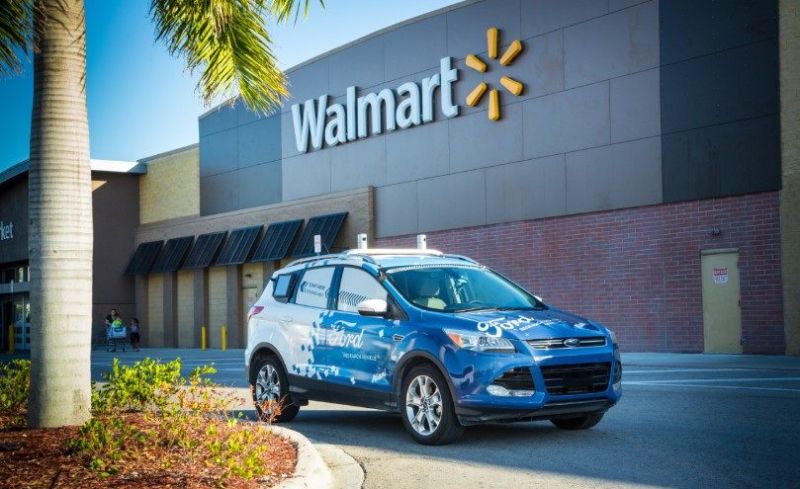
Ford, Walmart to collaborate on designing automated-vehicle delivery

Image result for ford self driving CAR
The project is the latest to grow out of Ford's broader effort to develop businesses that could use automated delivery vehicles. Ford was working with San Francisco-based Postmates already to develop delivery services that could employ automated vehicles.
The Walmart pilot, which will take place in the Miami area, initially will use human-driven vehicles operated to simulate how a self-driving vehicle would behave, Ford said. Ford has said it expects to launch commercial production of automated vehicles by 2021.
The new pilot project will offer customers delivery by Postmates of goods ordered at Walmart stores. Brian Wolf, an executive of Ford's autonomous vehicle unit, wrote in a blog post that the companies will work over the next "couple of months" to figure out what goods can be delivered successfully, especially perishable groceries.
"Before self-driving cars can go mainstream, we must get a better sense of how people want to interact with them," Tom Ward, Walmart senior vice president for digital operations, said in a statement on Thursday.
That could require new designs or equipment for vehicles, Wolf wrote. Among the challenges Ford has said it is working on is designing on-board storage systems that are easy for customers to open to retrieve a pizza or a package.
Postmates, according to its website, operates in 385 U.S. cities, as well as Mexico. It offers delivery from brick-and-mortar restaurants and stores.
Walmart is competing with online retailer Amazon.com (AMZN.O) and other rivals to cut the cost of delivering goods over what industry executives call "the last mile" to customers who order online.
Replacing human delivery van drivers with robotic systems could reduce last-mile delivery costs. But the technology is still expensive, and the industry is still waiting for regulations that could help protect automated vehicle owners or manufacturers from liability claims.

Ford is in discussions with German automaker Volkswagen AG (VOWG_p.DE) about a possible investment in its self-driving vehicle unit, people familiar with the situation said. No deal has been announced.Ford has emphasized commercial uses of autonomous vehicle technology, such as goods delivery, in contrast to rival General Motors Co (GM.N), which is working to build a robot taxi service at its GM Cruise unit.
In July, Ford said it would create a new business unit, Ford Autonomous Vehicles LLC, to house its self-driving vehicle operations. The automaker said it would invest a total of $4 billion in the unit through 2023.
by: www.reuters.com

Ford, Walmart to Collaborate on Designing Automated Vehicle Delivery
www.redlineautosales.ca/ford--walmart-to-collaborate-on-designing-automated-vehicle-delivery.htm

Friday, 9 November 2018

CARFAX Canada branding now official

Image result for carfax carproof
CARPROOF has officially rebranded its name to CARFAX Canada.
News of the name change was announced in the spring, when the company launched the rebranding process to better align with its U.S. counterpart, CARFAX.
"CARFAX Canada will continue to provide the same robust history and valuation information that dealers and consumers have come to expect from us," said Shawn Vording, Vice President of Automotive Sales at CARFAX Canada.
He adds: "We're excited to leverage the CARFAX brand because it better positions us to provide enhanced products and services to Canadians in the future, building on our extensive history of helping people make informed decisions about used cars."
Overall, the vehicle history, appraisal and valuation company is meant to help leverage the strength of the U.S. CARFAX brand so that more Canadians feel comfortable in buying and selling used vehicles in the country.

by: www.canadianautodealer.ca


Carfax Canada Branding Now Official 
www.redlineautosales.ca/carfax-canada-branding-now-official.htm